AI Detector: Technology, Uses, and Future
Artificial intelligence has seamlessly woven itself into the fabric of daily life. From generating emails to drafting complex code, AI models like ChatGPT and Claude have revolutionized how we create. But with this flood of machine-generated content comes a pressing question: How do we know what is human and what is not?
This is where the AI detector steps in. As the line between human and machine creativity blurs, the demand for reliable detection tools has skyrocketed. Whether you are an educator checking essays, a publisher verifying authorship, or a business ensuring authentic communication, understanding these tools is no longer optional.
In this comprehensive guide, we will explore exactly what an AI detector is, the complex mechanics behind it, and why it has become a critical tool in the modern digital landscape.
What Is an AI Detector and Why Do We Need It?
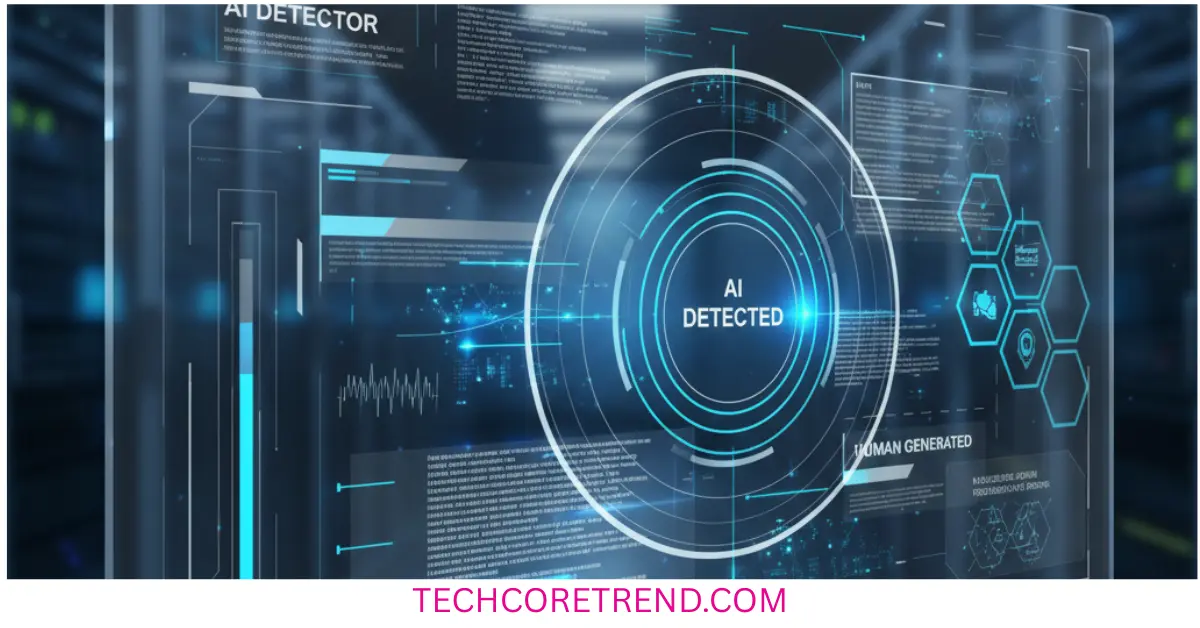
An AI detector is a specialized software tool designed to analyze text (and increasingly, images or video) to determine if it was generated by an artificial intelligence model. Think of it as a digital forensic analyst. It scans content for patterns, syntax structures, and statistical anomalies that are characteristic of large language models (LLMs) but unnatural in human writing.
The rise of generative AI brought incredible efficiency, but it also introduced new challenges.
The Integrity Crisis
The most immediate impact was felt in education. Teachers suddenly faced a wave of assignments that were grammatically perfect but lacked the nuanced understanding of a student. An AI detector became the first line of defense in maintaining academic integrity.
The Content Flood
For web publishers and SEO specialists, AI-generated content poses a different risk. Search engines like Google prioritize helpful, human-first content. Flooding a website with purely AI-generated articles can sometimes lead to penalties or lower rankings. An AI detector helps editors ensure that their content pipeline maintains a human touch.
Trust and Authenticity
In a world of deepfakes and automated bots, trust is a currency. Businesses need to know if the client emails, reviews, or legal documents they receive are authentic. An AI detector provides a layer of verification that protects against fraud and misinformation.
How an AI Detector Actually Works
To the average user, an AI detector looks like magic: you paste text, and it gives you a probability score. But under the hood, complex mathematical operations are taking place. These tools don’t “know” if text is AI-generated in the way a human knows a fact. Instead, they deal in probabilities.
Perplexity and Burstiness
Most detectors rely on two core concepts: perplexity and burstiness.
Perplexity measures how surprised an AI model is by a sequence of words. AI models are trained to predict the next word in a sentence based on massive datasets. If a piece of text follows the most predictable path—low perplexity—it is likely AI-generated. Humans are chaotic. We use unexpected words and strange phrasing. High perplexity usually signals human authorship.
Burstiness refers to the variation in sentence structure and length. AI models tend to be very consistent. Their sentences often have a uniform rhythm and length. Humans, however, are “bursty.” We might write a long, complex sentence followed immediately by a short, punchy one. An AI detector looks for this lack of variation to flag machine-generated content.
Watermarking and N-grams
Some advanced detection methods look for “watermarks.” These are subtle, invisible patterns embedded by the AI model during generation—like a secret code. While not yet universal, this method is seen as the future of reliable detection.
Additionally, detectors analyze N-grams, which are sequences of N items (words or characters). If the N-grams in a text match the most common patterns found in the training data of models like GPT-4, the AI detector will flag it.
The Classifier Model
Many detectors are themselves AI models. They are “classifiers” trained on huge datasets of both human-written and AI-generated text. They learn the distinct “fingerprint” of machine writing. When you input text, the classifier compares it against its training to predict the likelihood of it being AI.
Applications of the AI Detector Across Industries
While education is the most discussed use case, the utility of an AI detector spans across almost every sector that relies on digital communication.
Education and Academia
This is the battleground where AI detection gained prominence. Schools and universities use these tools to screen admissions essays, research papers, and homework. The goal isn’t just to catch cheaters, but to ensure students are actually learning critical thinking skills rather than outsourcing their cognition to a bot.
Digital Marketing and SEO
Content agencies use AI detectors to verify the work of freelance writers. If a client pays for a human-written article, they expect human expertise. Furthermore, SEO strategists use these tools to audit their websites. They want to ensure their content is unique and engaging enough to bypass the “spam” filters of search engines, which often downgrade low-quality, repetitive AI content.
Publishing and Journalism
Credibility is the cornerstone of journalism. Major publications use AI detection to ensure that submitted op-eds and articles are authentic. In an era of “fake news,” verifying that a human actually witnessed and wrote about an event is crucial for maintaining public trust.
Cybersecurity and Fraud Prevention
Cybercriminals use AI to write convincing phishing emails and scam messages. Security firms integrate AI detector technology into their firewalls and email filters to identify and block these automated threats. If an email claiming to be from your CEO has the statistical fingerprint of a chatbot, the system can flag it as suspicious.
Recruitment and HR
HR departments are flooded with cover letters and resumes. An AI detector helps recruiters identify candidates who have written their own application materials versus those who simply generated generic responses. This helps identify candidates with genuine communication skills.
The Benefits of Using an AI Detector
Implementing an AI detector offers tangible advantages for organizations and individuals striving for quality and authenticity.
Upholding Standards
The primary benefit is quality control. Whether it’s a student’s thesis or a marketing blog post, knowing the source helps maintain high standards. It ensures that the effort, creativity, and nuance expected of human work are present.
Saving Time
Before these tools existed, spotting AI content required a keen human eye and hours of reading. An AI detector automates this process, scanning thousands of words in seconds. This efficiency allows editors and teachers to focus on grading or refining content rather than policing it.
Encouraging Originality
The mere presence of an AI detector can act as a deterrent. Knowing that their work will be screened encourages writers and students to rely on their own skills. It pushes them to inject personal insights, unique data, and distinct voice into their writing—elements that AI still struggles to replicate perfectly.
Protecting Intellectual Property
For businesses hiring ghostwriters or copywriters, paying for original work is an investment. An AI detector ensures you get what you pay for—unique intellectual property, not a remix of internet data generated by a machine.
Limitations: The Elephant in the Room
Despite their usefulness, no AI detector is perfect. Relying on them blindly can lead to serious consequences. It is vital to understand their limitations.
False Positives
The biggest controversy surrounding AI detection is the “false positive.” This happens when the tool incorrectly flags human-written text as AI-generated. This is particularly common with non-native English speakers, whose writing might be more formulaic or grammatically rigid—traits that detectors associate with AI. In academic settings, a false positive can wrongly accuse an honest student of cheating, causing significant distress and reputational damage.
The Cat-and-Mouse Game
AI technology evolves faster than detection technology. When a new, more human-like model is released, existing detectors often become less accurate until they are updated. Furthermore, tools like “paraphrasers” or “humanizers” are designed specifically to trick the AI detector. They rewrite AI text to alter the perplexity and burstiness, effectively bypassing detection.
Context Blindness
An AI detector analyzes syntax, not truth. It cannot tell if the content is factually accurate or logically sound. It only looks at how the sentences are constructed. A completely hallucinated, false article written by AI might be flagged as AI, but so might a dry, technical manual written by a human.
Short Text Unreliability
Most detectors struggle with short snippets of text. If you input a single paragraph (under 50 words), there often isn’t enough data for the tool to make a statistically significant judgment. The results for short social media captions or emails are often unreliable.
Future Trends in AI Detection Technology
As generative AI becomes more sophisticated, the AI detector must evolve to keep up. The future of this technology lies in more nuance and better integration.
Beyond Text: Multi-Modal Detection
AI is no longer just about text. We now have AI-generated images, audio, and video. Future detectors will be multi-modal, capable of spotting deepfake videos or synthesized voices. We are already seeing the emergence of tools designed to detect AI-generated artwork by analyzing pixel inconsistencies and rendering artifacts.
The Rise of Watermarking
Tech giants like Google and OpenAI are working on standardizing watermarking. This involves embedding an imperceptible signal into the output of the AI model itself. A future AI detector won’t need to guess based on perplexity; it will simply look for this digital signature to confirm authenticity with 100% accuracy.
Semantic Analysis
Future detectors will likely move beyond statistical analysis (looking at word patterns) to semantic analysis (looking at meaning). They might analyze the logic flow, the consistency of arguments, and the depth of insight—areas where humans still hold a significant advantage over machines.
Integration into Writing Platforms
Rather than being a standalone tool, the AI detector will likely become a standard feature in word processors and CMS platforms. Just as you have a spell-checker today, you will have an “authenticity checker” tomorrow, giving you real-time feedback on the originality of your content.
Focusing on “Co-Pilot” Detection
Instead of a binary “Human vs. AI” verdict, future tools might offer a more granular breakdown. They might identify that an outline was AI-generated but the body text was heavily edited by a human. This shift acknowledges that the future of work is likely a hybrid model, where humans and AI collaborate.
Conclusion
The AI detector has rapidly transformed from a niche technical curiosity into a fundamental tool for digital governance. As we navigate a world increasingly populated by synthetic media, these tools serve as vital checkpoints for authenticity, integrity, and trust.
However, they are not magic wands. They are statistical tools with inherent limitations. Whether you are an educator, a business owner, or a content creator, the key to using an AI detector effectively lies in treating it as a signal, not a verdict. It should prompt a conversation, not an immediate accusation.
The technology will continue to evolve. The arms race between generation and detection will persist. But one thing is certain: as long as we value human creativity and authentic connection, the AI detector will remain an essential component of our digital toolkit. By understanding how they work, where they fail, and where they are heading, we can better navigate the complex, exciting future of artificial intelligence.