What Is an AI Voice Generator and Why Should You Care?
Imagine typing a sentence on your computer and hearing it spoken back to you in a human voice. It doesn’t sound like a robot from an old movie. It sounds like a real person—maybe even someone famous, or perhaps just a friendly stranger. This technology is called an AI voice generator, and it is changing the way we interact with our devices.
You might have heard voices on TikTok videos that sound the same, or maybe you’ve listened to an audiobook that wasn’t read by a human. That is the power of AI voice technology. It is everywhere, and it is becoming easier to use every day.
In this guide, we will break down exactly what this tool is. We won’t use big, confusing words. We will look at how it helps people, how it works, and what we need to watch out for as it gets better.
What Is an AI Voice Generator?
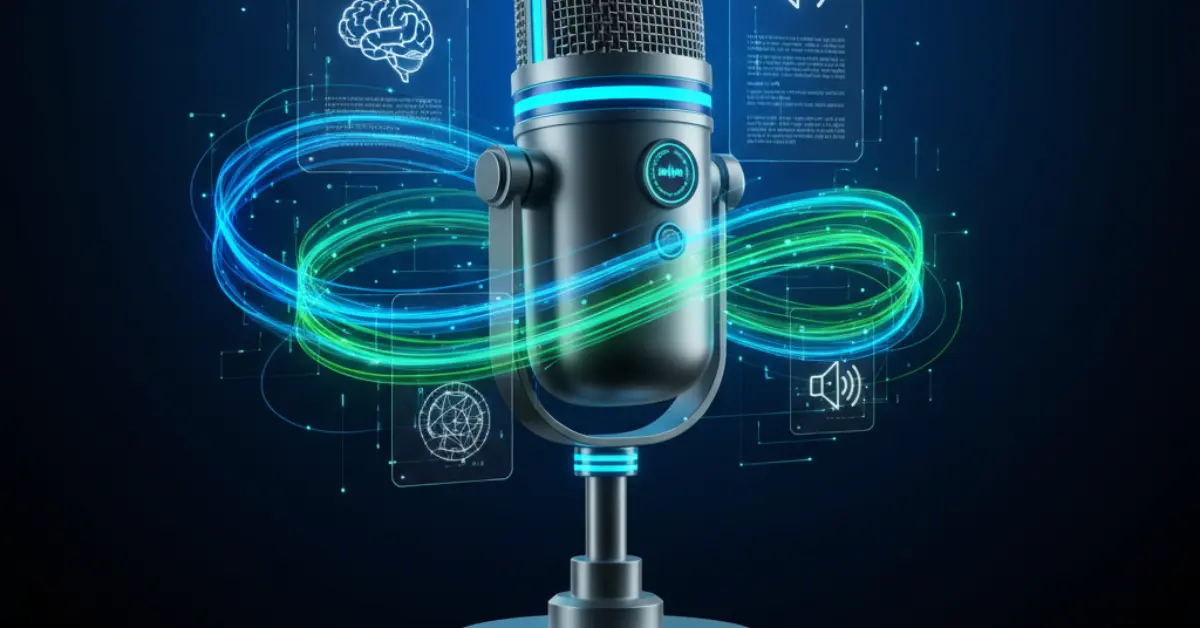
Let’s start with the basics. An AI voice generator is a computer program. Its main job is to turn written text into spoken words. “AI” stands for Artificial Intelligence. This means the computer is smart enough to learn how humans speak.
In the past, computer voices sounded very choppy. They sounded like machines. You could tell immediately that it wasn’t a person. Today, these generators are much smarter. They can pause for breath. They can show excitement or sadness. They can change their pitch.
Think of it like a very talented parrot. A parrot mimics sounds. But an AI voice generator mimics the rules of human speech. It knows how to pronounce tricky words. It knows when to raise its voice at the end of a question. It does all of this instantly after you type in the words.
How Does It Actually Work?
You don’t need to be a scientist to understand how this works. Think of it like baking a cake.
- The Ingredients (Data): To make a good voice, the computer needs to listen to thousands of hours of real human speech. It listens to people reading books, news, or just talking. This is the “training” phase.
- The Recipe (The Model): The computer looks for patterns. It notices that when people see a comma, they pause. It learns that the word “wind” sounds different if you are talking about the weather versus winding a clock.
- The Baking (Processing): When you type “Hello, how are you?”, the AI looks at its recipe. It finds the sounds for H-E-L-L-O. It strings them together smoothly.
- The Cake ( The Result): The computer produces an audio file. You click play, and you hear the voice speaking your words.
- This whole process happens in a split second. The AI doesn’t just read letters; it tries to understand the feeling behind the words so it sounds natural.
Why Are People Using AI Voice Generators?
You might wonder, “Why don’t we just record real people?” That is a great question. Real people are great, but AI voice generators offer some special benefits that humans can’t always match.
1. It Saves a Lot of Time
Recording a voiceover takes a long time. You have to set up a microphone. You have to find a quiet room. If you make a mistake, you have to start over.
With an AI voice generator, you just type and click. If you made a spelling mistake, you fix the text and click again. What takes a human three hours might take a computer three minutes.
2. It Is Much Cheaper
Hiring a professional voice actor costs money. You have to pay them for their time and their equipment. For a small business owner or a student, this might be too expensive. Many AI tools are free or cost very little. This opens doors for people with small budgets to make high-quality content.
3. It Never Gets Tired
A human voice actor needs breaks. They get sore throats. They need to sleep. An AI voice generator can work 24 hours a day, 7 days a week. It never gets a cold. It never sounds grumpy because it didn’t drink coffee. It delivers the same quality every single time.
4. You Can Use Many Languages
This is one of the coolest parts. Imagine you wrote a story in English, but you want people in Spain to hear it. You probably don’t speak perfect Spanish. An AI voice generator does. You can translate your text and have the AI read it in Spanish, French, German, or Japanese with a perfect accent.
Common Uses for AI Voice Generators
So, who is actually using these tools? You encounter them more often than you think. Here are some simple examples of how they are used in the real world.
Social Media Videos
If you watch TikTok, Instagram Reels, or YouTube Shorts, you have heard AI voices. Many creators do not like the sound of their own voice. Or, maybe they don’t have a good microphone. They type their captions into an AI tool, and the computer narrates the video for them. It makes the video sound professional and clear.
Audiobooks and E-Learning
Not every book gets turned into an audiobook because it costs too much to hire a narrator. With AI, smaller authors can turn their books into audio. This is also great for schools. Teachers can create lessons that students can listen to on the bus. It helps students who learn better by listening than by reading.
Helping People with Disabilities
This is perhaps the most important use. Some people cannot speak due to illness or injury. In the past, the machines they used to communicate sounded very robotic. Think of the famous scientist Stephen Hawking.
Today, AI voice generators allow these people to have voices that sound natural. Some technology can even recreate a person’s own voice if they are losing it, so they can still sound like themselves through a computer.
Customer Service on the Phone
Have you called a bank or a cable company recently? The voice that asks, “How can I help you today?” is often an AI. It can understand what you say and answer your questions without making you wait for a human agent.
GPS and Navigation
“Turn left in 500 feet.” We all know that voice. AI helps generate these directions instantly for every street name in the world. It would be impossible for a human to record every single street name, but the AI can read them as it sees them on the map.
The Different Types of AI Voices
Not all AI voices are the same. There are different styles for different jobs.
- The Friendly Helper: This voice sounds happy and polite. It is used for customer service or welcoming people.
- The Serious News Reader: This voice is deep and calm. It sounds like a news anchor on TV. It is good for documentaries or educational videos.
- The Storyteller: This voice has a lot of emotion. It can whisper or shout. It is used for audiobooks and games.
- The Character: Some generators can sound like children, old men, or even fantasy creatures. This is fun for making cartoons or video games.
How to Choose the Right AI Voice Generator
If you want to try this yourself, there are many websites and apps available. Here is what you should look for when choosing one.
Look for “Natural” Sounding Voices
The most important thing is quality. Listen to the samples. Does the voice sound like a robot taking a deep breath? Or does it flow smoothly? The best tools have voices that breathe and pause naturally.
Check the Language Options
If you only need English, almost any tool will work. But if you want to make content for friends in other countries, check the list of languages. Some tools offer over 100 different languages and accents.
Ease of Use
You don’t want a tool that looks like a spaceship control panel. Look for a simple box where you type text and a big “Play” button. Good tools let you adjust the speed (fast or slow) and the pitch (high or low) easily.
Cost
Many excellent tools have a free version. Usually, the free version lets you generate a few minutes of audio per month. If you need more, you pay a monthly fee. Start with a free one to see if you like it.
The Challenges and Risks
While AI voice generator technology is amazing, it is not perfect. There are some things we need to be careful about.
Lack of Real Emotion
Even though AI is getting better, it still struggles with deep feelings. If a character in a book is crying while speaking, a human actor can do that perfectly. An AI might just sound like a sad robot. It sometimes misses the “soul” of a performance.
Pronunciation Mistakes
English is a tricky language. The words “read” (like a book) and “read” (past tense) look the same but sound different. Sometimes the AI gets confused. It might mispronounce names of people or towns. You often have to spell words phonetically (like “fone-et-ick-lee”) to get the AI to say it right.
The “Deepfake” Problem
This is a serious issue. Because AI can copy voices so well, some people use it for bad reasons. They might take a recording of a politician or a celebrity and make them say things they never actually said. This is called a “deepfake.”
It can also be used for scams. Imagine getting a phone call that sounds exactly like your grandson asking for money. It might actually be a scammer using an AI voice generator. We have to be very careful and double-check who we are talking to.
Taking Jobs from Humans
Voice actors are worried. If computers can do the work cheaper and faster, will humans lose their jobs? It is a valid concern. However, for big Hollywood movies and important emotional stories, humans are still the best choice. AI is mostly taking over the boring, repetitive work.
Tips for Getting the Best Results
If you decide to use an AI voice generator, here are some simple tips to make your audio sound great.
- Use Short Sentences: AI handles short, clear sentences better than long, complicated ones.
- Use Punctuation: Commas, periods, and question marks tell the AI when to pause and when to change its tone. If you leave them out, the AI will rush through the text.
- Spell Trick Words differently: If the AI can’t say a name right, try spelling it like it sounds. For example, if it can’t say “Sean,” try typing “Shawn.”
- Listen and Edit: Don’t just trust the computer. Listen to the whole recording. If one part sounds weird, go back and change the text slightly to fix it.
The Future of AI Voices
Where is this technology going? It is moving very fast.
In the future, we might be able to have full conversations with our computers that feel completely real. Video games will have characters that can talk to you about anything, not just read lines from a script.
We are also seeing “Voice Cloning” become popular. This allows you to record a few minutes of your own voice, and the computer learns to speak just like you. This means you could “read” a bedtime story to your kids even if you are away on a business trip, just by typing the story into your phone.
Conclusion
The AI voice generator is a powerful tool that turns text into speech. It is making it easier for people to create videos, listen to books, and communicate with the world.
While it has some challenges, like sounding a little robotic sometimes or being used for tricks, the benefits are huge. It saves time, saves money, and helps people with disabilities find their voice.
As technology gets better, the line between human and computer voices will get blurrier. Whether you are a student, a business owner, or just someone who likes technology, understanding how this works is useful. It is not just science fiction anymore; it is a part of our daily lives.
Next time you hear a voice on your phone or computer, stop and listen closely. Is it a person? Or is it a machine? You might be surprised that you can’t tell the difference.